
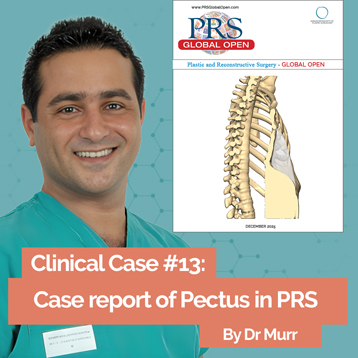
Patient presentation and diagnosis
A 26-year-old man presented with a marked chest wall deformity.
Clinical examination confirmed a funnel chest, objectified by a Haller depth index of 6.5, indicating significant sternal depression. The patient reported no cardiopulmonary symptoms, but the deformity had a significant aesthetic and psychological impact.
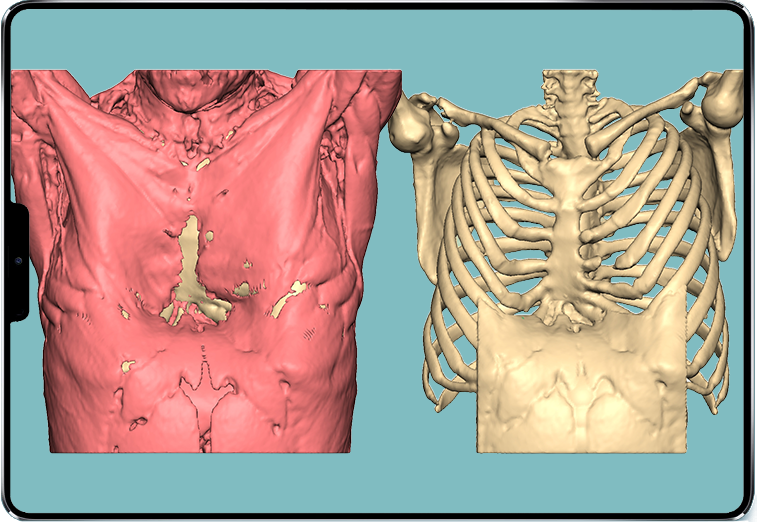
The patient presented with a low asymmetric pectus arcuatum (Type 4/3 according to the Chavoin classification). He wished to avoid major surgery. The option of surgical correction using a custom-made 3D implant technique was selected by his plastic surgeon to correct this highly visible chest wall deformity.
Surgical procedure
The correction was performed through a short skin incision, sufficient to prepare a deep submuscular pocket to accommodate the implant. No modification of the sternum or costal cartilages was required.
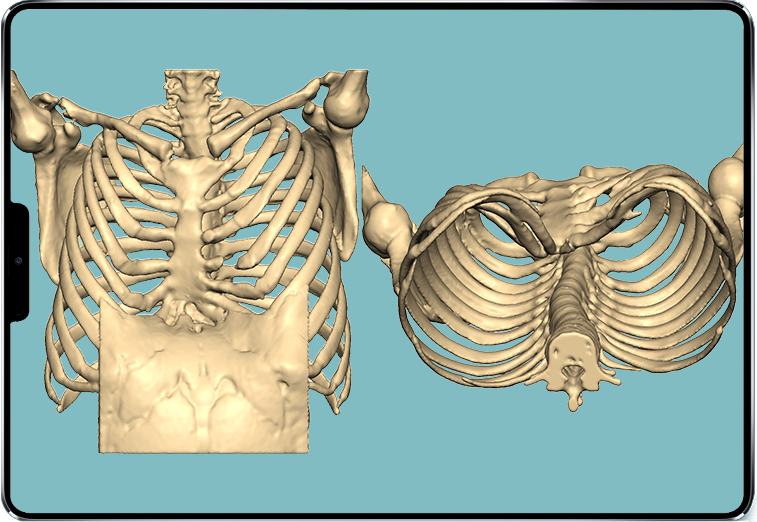
The implant was positioned to restore the natural chest contour, and the muscular and skin approach was then closed. The procedure follows the principles of a minimally invasive approach: short operative time, no permanent metallic material, and reduced morbidity.
Results
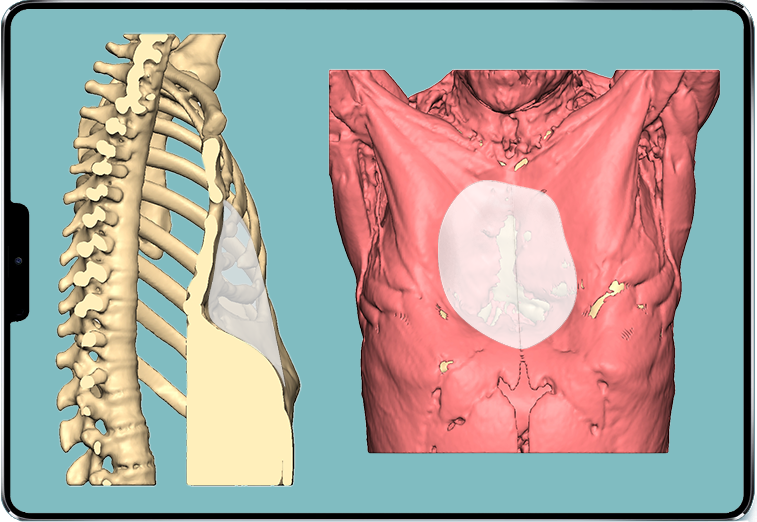
The procedure provided immediate correction of the chest depression, with a harmonized and stable contour. Postoperative recovery was straightforward, and the patient quickly resumed daily activities after 15 days, while sports activities were allowed after three months. This experience demonstrates that this type of customized reconstruction can be successfully performed, expanding access to this technique.
This case highlights the value of a custom-made 3D thoracic implant to correct funnel chest deformities in adults aged 15 to 65, using a minimally invasive approach with predictable aesthetic results, even in complex asymmetric or deep cases. The demonstrated feasibility underscores the international potential of this technique: a personalized, reproducible, and accessible solution for patients wishing to avoid major thoracic procedures.
About the author
Dr. Chadi Murr is a plastic, reconstructive, and aesthetic surgeon practicing in Beirut (Lebanon). He specializes in the management of congenital malformations and chest wall deformities, particularly pectus excavatum in adults.
Trained in Europe, he is the author of international scientific publications, including a case report published in PRS Global Open describing a minimally invasive technique for pectus reconstruction using a custom-made 3D implant without major thoracic surgery.
His clinical approach is based on personalized surgery, technological innovation, and predictable aesthetic outcomes, in compliance with international standards of plastic and reconstructive surgery.