
Case Presentation
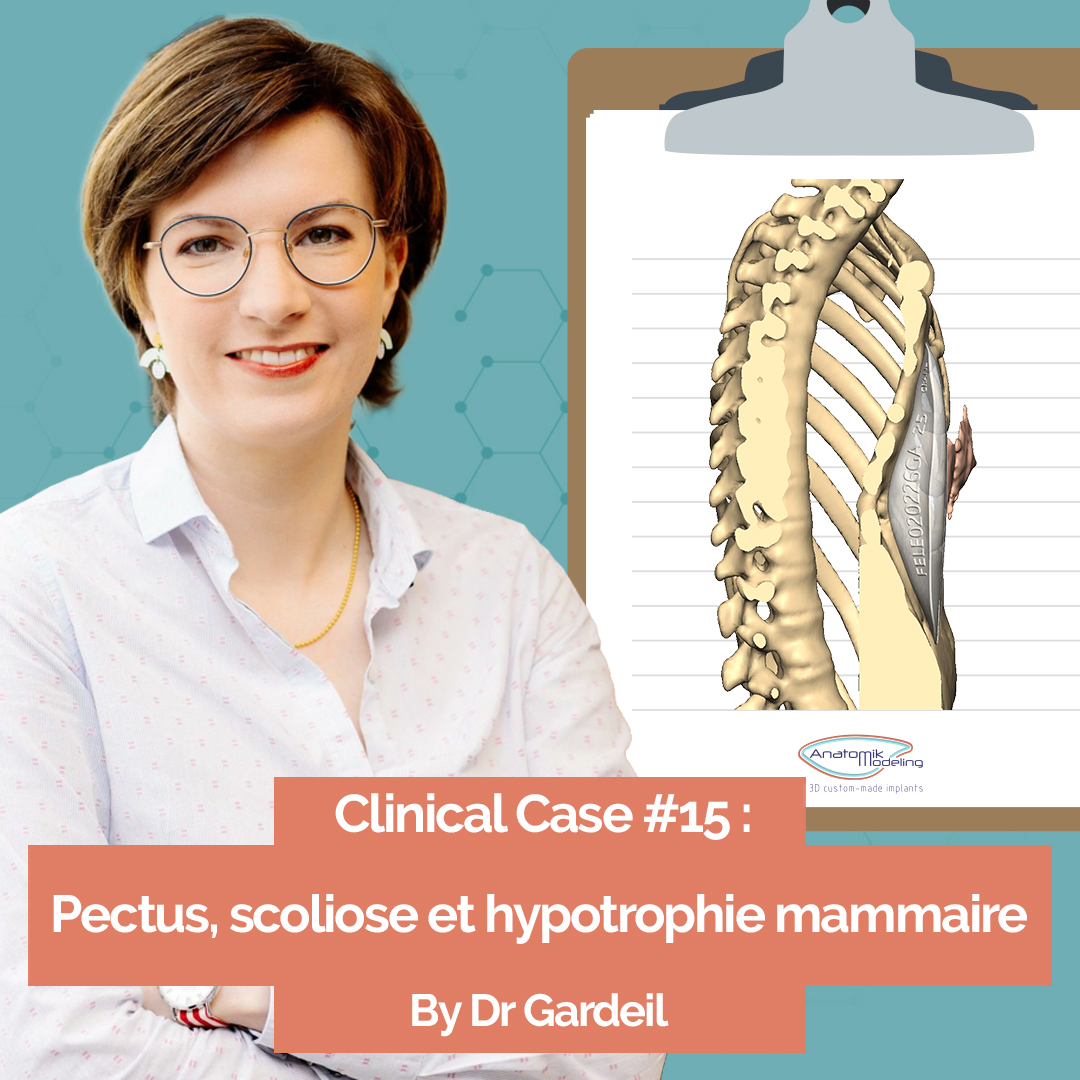
The 25-year-old patient presents with deep, asymmetric Pectus Excavatum, characterized by a chest wall depression predominantly affecting the right side. This is a type 4/3 case, meaning a low Pectus Arcuatum with a deep, low-positioned depression shifted to the right.
This deformity is associated with two anatomical features:
- Scoliosis
- Breast hypoplasia
The patient has experienced discomfort related to her chest wall deformity since adolescence.
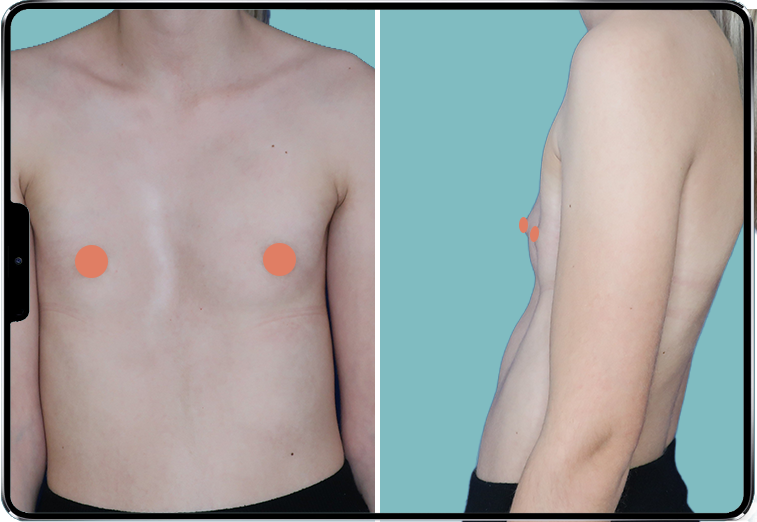
Given the combination of the chest wall deformity and breast hypoplasia, a two-stage surgical approach is planned: first correcting the sunken chest, followed by breast augmentation in a second procedure.
Pectus Correction Using a Custom-Made 3D Implant
In all cases involving associated breast abnormalities, correction of the chest wall deformity is essential. Breast surgery, if required, is only performed one year after the chest wall contour has been restored, providing a normalized foundation for the breasts.
The first stage therefore consists of correcting Pectus Excavatum using a custom-made 3D chest implant. The procedure performed by Dr Ludivine Gardeil was completed without any particular technical difficulties.
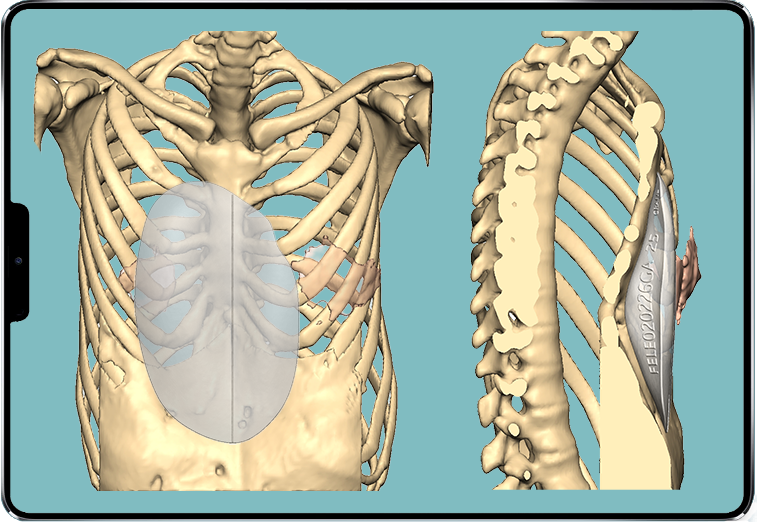
Implant placement required a 7 cm incision.
Postoperative Recovery
The postoperative period was characterized by minimal chest pain. The patient mainly reported abdominal discomfort.
Two aspirations of 50 ml each were required during the first two postoperative weeks, at a rate of one aspiration per week.
Recovery subsequently progressed well, with the patient resuming all her activities two months after surgery.
During postoperative follow-up, Dr Gardeil observed:
- A very supple scar
- No muscular adhesions
- No deformity during muscle contraction
Note: Sports activities must be avoided for at least 3 months.
Results and Patient Satisfaction
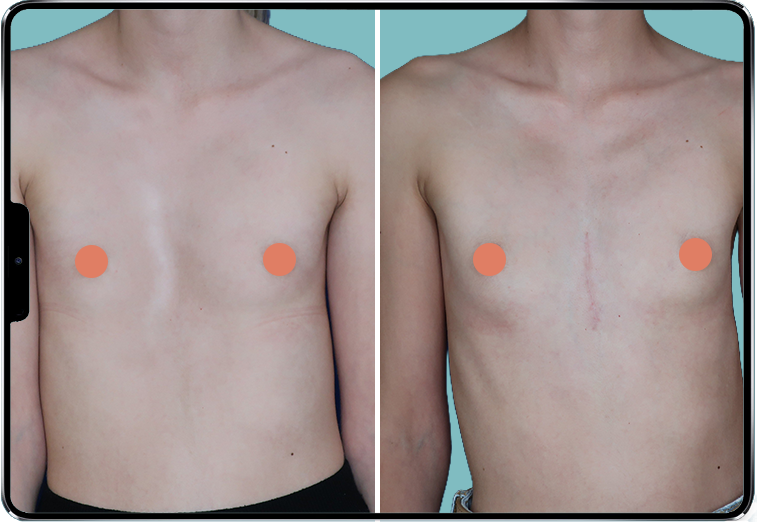
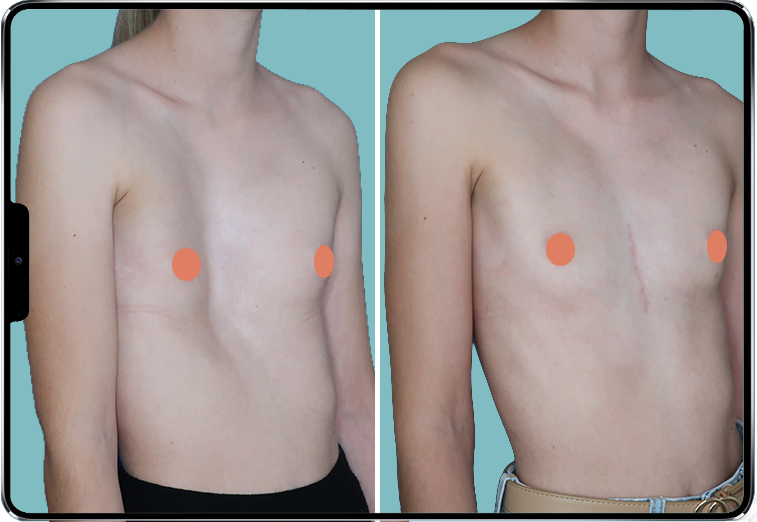
The patient is very satisfied with the result achieved following correction of her chest wall deformity.
This first procedure represents the initial stage of her planned chest wall and breast correction.
She is now considering breast augmentation the following year, in accordance with the initially established surgical strategy.
Conclusion
This clinical case illustrates the treatment of deep, asymmetric Pectus Excavatum in a young woman who also presents with scoliosis and breast hypoplasia.
Correction using a custom-made 3D implant achieved a result considered highly satisfactory by the patient, with favorable postoperative recovery and a full return to activities two months after surgery.
Breast augmentation is planned as a second stage to continue the initial surgical treatment plan.
Surgeon
Dr Ludivine Gardeil
Dr Ludivine Gardeil is a plastic, reconstructive and aesthetic surgeon at Clinique de l’Europe in Rouen, France, where she has been practicing since 2022.
After studying medicine in Toulouse, she continued her surgical training at Rouen University Hospital, specializing particularly in breast and body contouring surgery.
Trained by AnatomikModeling and Prof. Chavoin in Toulouse in the correction of chest wall deformities using custom-made 3D implants, she offers patients in Rouen personalized treatment for Pectus Excavatum and Poland syndrome, adapted to each patient's anatomy.