Pectus in a young woman: correction of deep Pectus Excavatum with a 3D custom-made implant
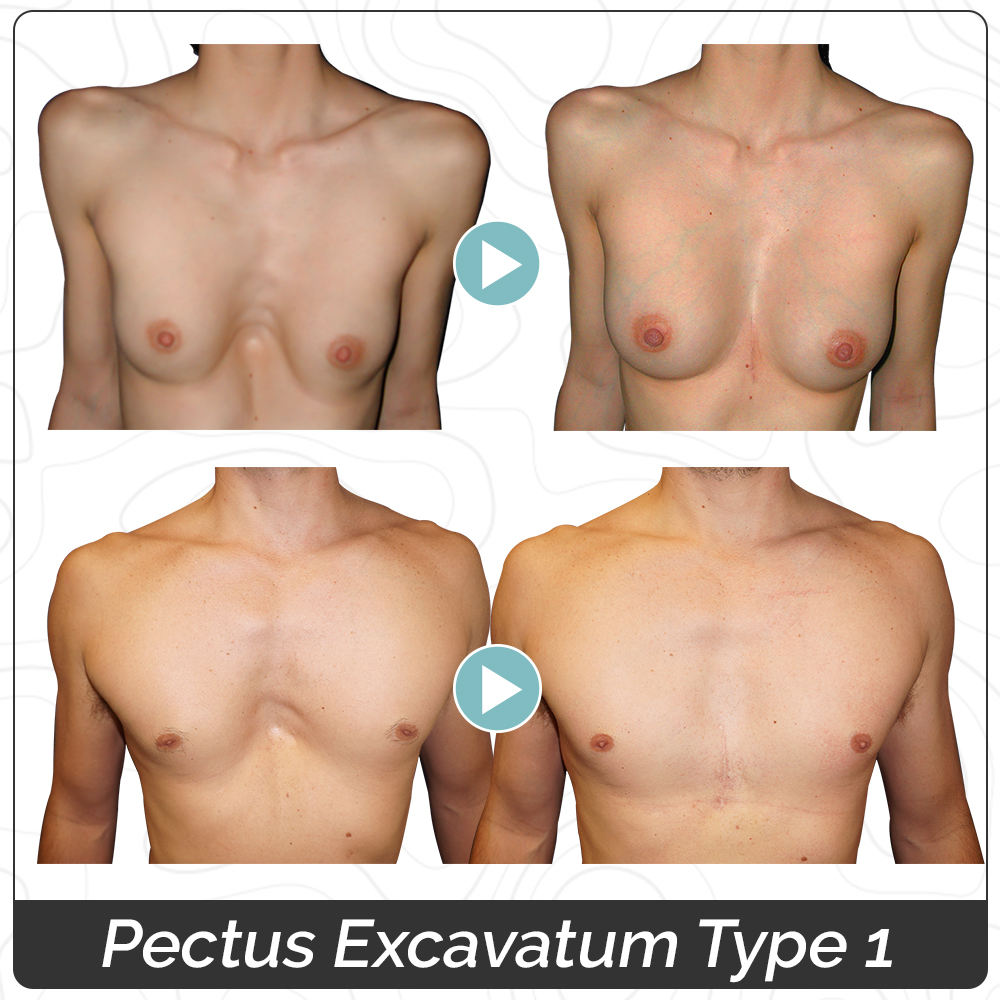
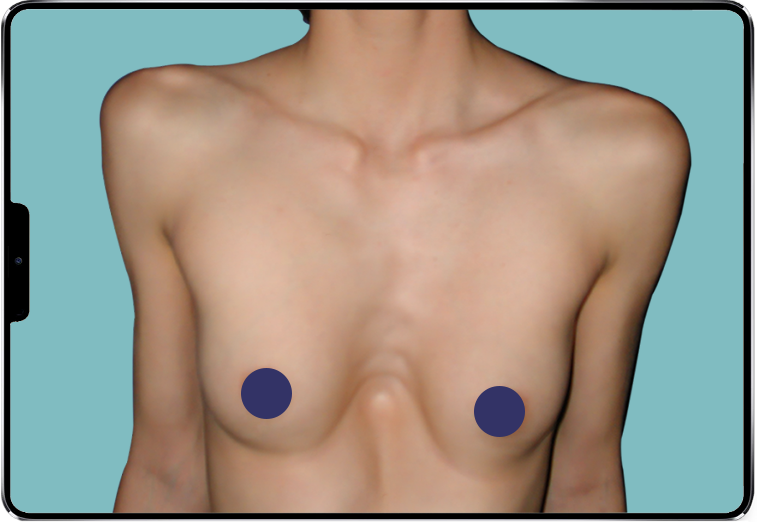
This young woman initially consulted Prof. Jean-Pierre Chavoin for breast implants. Her breasts are symmetrical and medium-sized, but are separated by a deep intermammary depression. The ribs protrude on both sides and the chest depression is particularly pronounced.
Surgeon's opinion:
Clinical examination shows that the appearance of the cleavage is mainly related to the presence of a low and very deep type 1 Pectus Excavatum, rather than a lack of breast volume.
He explains to the patient that this chest depression can be corrected using a 3D custom-made silicone elastomer implant.
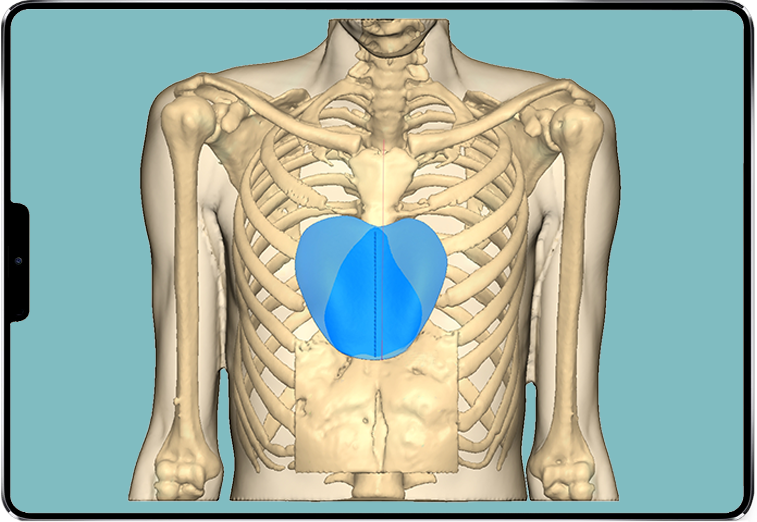
Breast volume can be reassessed at a later stage, after correction of the chest. Breast augmentation will only be considered if the patient still feels it is necessary after the procedure.
Patient's opinion:
The patient is aware of her chest deformity and understands that it plays an important role in the appearance of her breasts. She therefore agrees to correct the Pectus with a 3D custom-made implant before potentially considering breast implants.
Surgery
Under general anesthesia, the implant is inserted through a midline incision of approximately 7 cm into a pocket prepared beneath the pectoral muscles and abdominal fascia, allowing it to be concealed and precisely stabilized before closure.
Discover more details about Pectus surgery with implants
Before-and-after photo
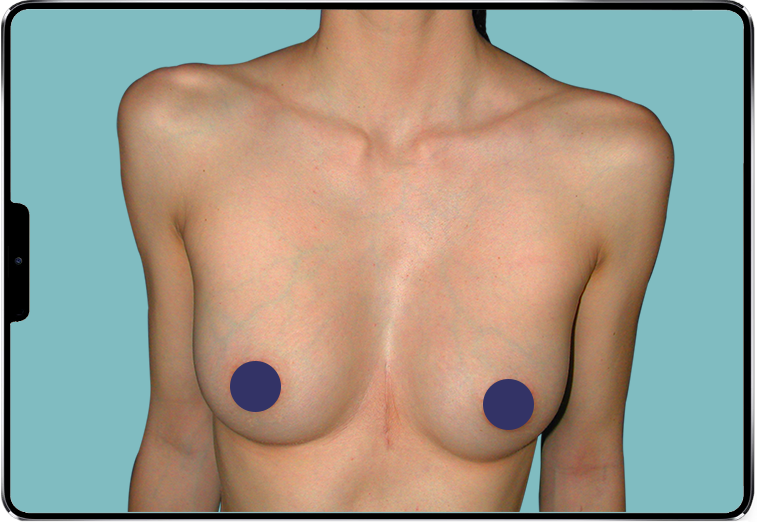
At three months, the before-and-after photo of the Pectus Excavatum shows complete correction of the chest deformity, with improved breast projection.
Although the patient initially consulted for breast augmentation, she is fully satisfied with the result achieved after Pectus correction and ultimately no longer wishes to have breast implants.
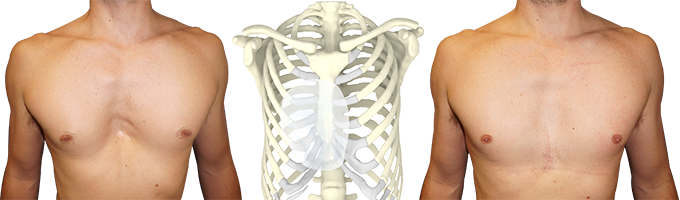
Pectus in a man: correction of deep, symmetrical Pectus Excavatum
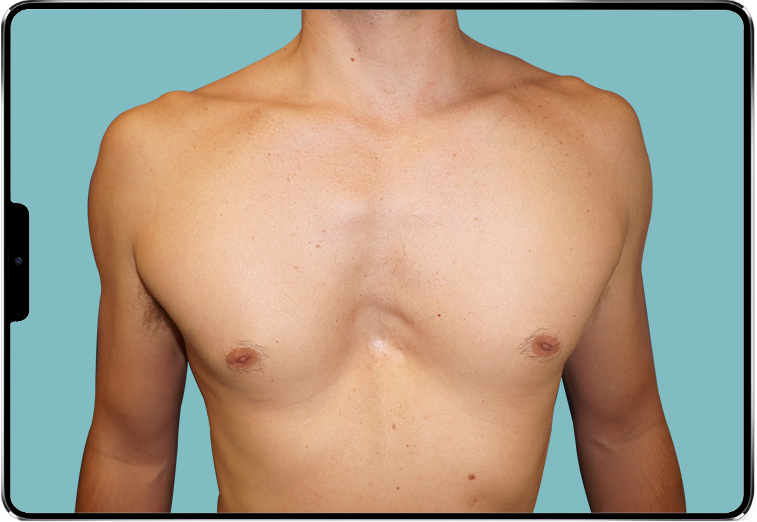
This 34-year-old man consulted a reconstructive surgeon on the advice of his general practitioner because of his chest wall deformity. A regular athlete since adolescence, he has felt self-conscious about the depression in his chest from an early age, which gradually became more visible as he grew.
Despite regular and intensive daily exercise, he experiences no functional impairment. His request is therefore primarily morphological, related to the appearance of his chest and the discomfort he feels about other people's perception when he is bare-chested.
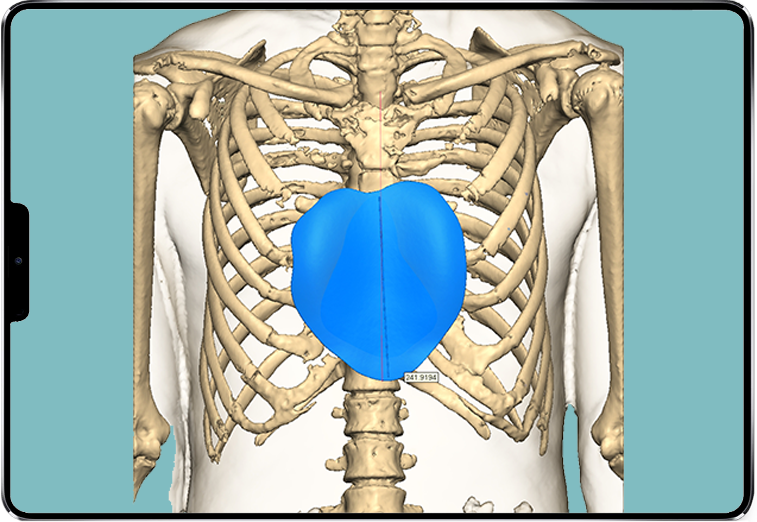
The chest CT scan confirms and precisely analyzes the deformity: it is a deep, symmetrical type 1 Pectus Excavatum, with maximum depression in the epigastric region.
Surgeon's opinion:
The absence of functional impairment and the primarily morphological nature of the patient's request make correction of the Pectus Excavatum with a 3D custom-made implant an appropriate option. The implant is designed from the patient's CT scan to precisely match the shape and depth of the chest deformity.
Patient's opinion:
The patient had never wished to undergo orthopedic surgery to remodel the rib cage, particularly because of the extent of the procedure and the period of functional incapacity it involves. He therefore chooses morphological correction using a 3D custom-made implant created with Computer-Aided Design.
Surgery
Under general anesthesia, the 3D custom-made implant is placed in a pocket created beneath the pectoralis major muscles in its upper part and beneath the fascia of the rectus abdominis muscles in its lower part. No drainage is required.
Discover more details about Pectus surgery with implants
The postoperative course is straightforward, with moderate pain controlled with paracetamol. A seroma requires three aspirations performed during outpatient consultations, eight days apart.
Due to his physically active occupation as a police officer, the patient returns to work after one month.
Before-and-after photos
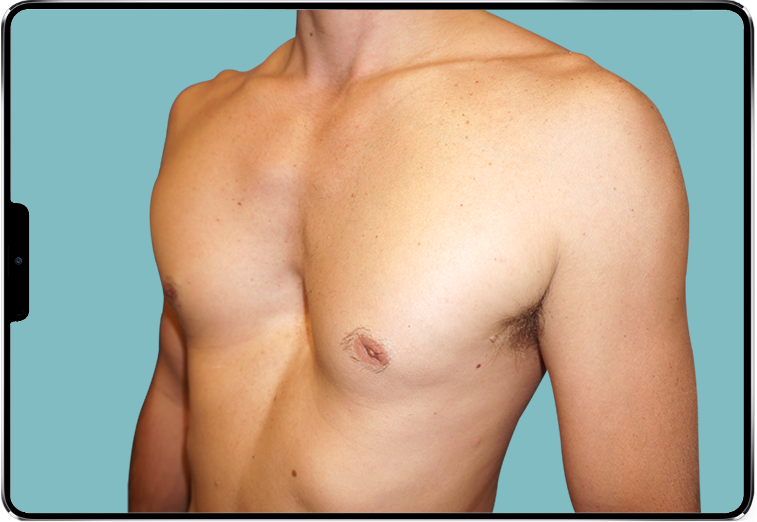
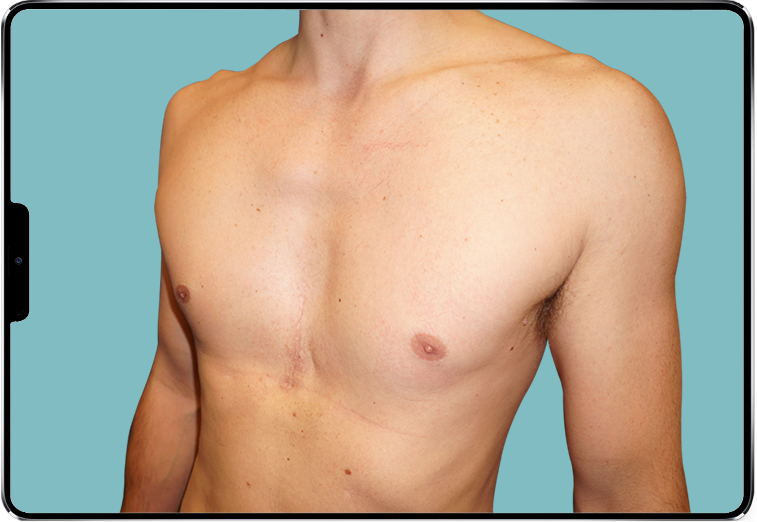
At three months, the before-and-after photo of Pectus Excavatum in this man shows correction of the chest depression and restoration of a smoother, more natural chest contour. The midline scar is already very discreet.
More before/after photos: Before/after results