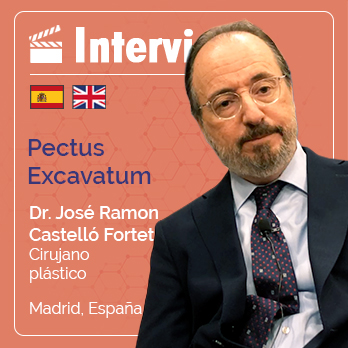
Hello, I am Dr. José Ramón Castelló. I am a plastic surgeon at Puerta de Hierro Hospital in Madrid, and I also have a private practice where I perform these techniques to correct both Poland syndrome and Pectus excavatum.
What is the interest of 3D implants to treat Pectus Excavatum?
Previously, we worked with implants made from alginate molds, which were then custom-manufactured. This new technique allows much greater precision in the design of the implant. In fact, it eliminates the need for us to create the mold ourselves using alginate or plaster.
Additionally, it enables sub-muscular placement of the implant in cases of Pectus Excavatum. This is certainly what is key to achieving the good results of this technique.
Conclusion
The transition from traditional alginate molds to digitally designed custom 3D implants marks a significant improvement in sunken chest surgery. Greater precision and submuscular placement contribute to more predictable and natural results.
About Dr. José Ramón Castelló
Dr. José Ramón Castelló, Head of Plastic Surgery at Puerta de Hierro University Hospital (Madrid) and NYU Fellow, has published in Plastic and Reconstructive Surgery on chest wall reconstruction. His academic and surgical expertise underpins his specialized approach to Pectus Excavatum correction with 3D implants.